


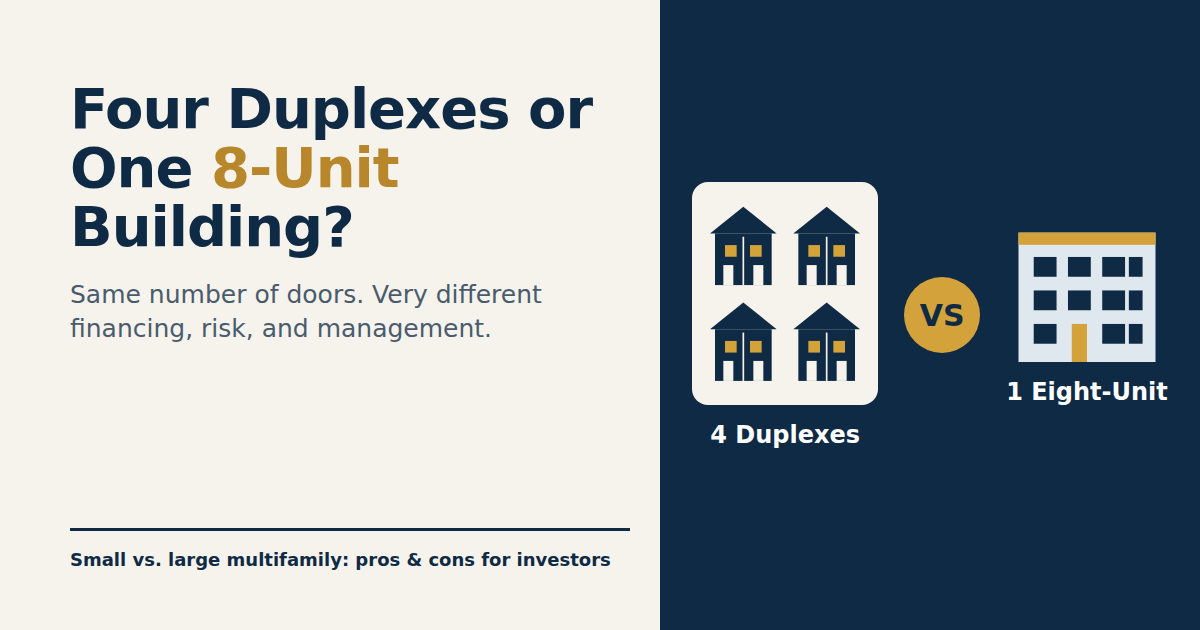
Most investors assume a 5-unit building is just a slightly bigger 4-unit. To a lender, it’s a different kind of property.
The line between 4 and 5 units is where residential lending ends and commercial lending begins. Knowing which side of that line you’re on changes how you shop, how you underwrite, and how you plan your exit.
1–4 units: underwritten like a house (mostly)
A duplex, triplex, or fourplex is still treated as residential real estate. That means:
- Value comes from comparable sales. The appraiser looks at what similar small multifamilies nearby sold for.
- 30-year fixed financing is common. Conventional, FHA (owner-occupied), and DSCR loans all serve this space.
- Owner-occupants get the best terms. If you live in one unit, you can put down far less than a pure investor. This is the classic “house hack.”
- Investors have more options than ever. DSCR loans qualify the property on its rent instead of your tax returns. That’s huge for self-employed borrowers and for investors whose finances are too complex for a full-documentation loan.
- Loan amount/ Down payment. These are influenced by credit score and how well the property cash flows (rent or market rent).
5+ units: underwritten like a business
Add one more door and the lender stops asking “What did the house next door sell for?” and starts asking “What does this building earn?”
- Value comes from income. The appraisal is driven by net operating income (NOI) and the market cap rate.
- The property has to carry the debt. Lenders look for a debt service coverage ratio (usually 1.20x–1.25x or better), meaning the building’s net income is at least 20–25% more than the mortgage payment.
- Terms look different. Expect things like 5-, 7-, or 10-year terms, balloon payments, and prepayment penalties. 30-year fixed options do exist for 5+ units, but they come with different terms than a typical 1–4 unit loan.
- Your experience matters. Many commercial lenders want to see that you (or your property manager) have run rentals before.
Why this matters before you make an offer
Here’s where investors get burned: they find a great 6-unit, run the numbers like a fourplex, then learn the loan has a 5-year balloon and a step-down prepayment penalty. That kills their plan to refinance in two years.
Before you write an offer, ask three questions:
- What loan types fit this property size?
- What does the lender need the NOI to be? Not what the seller says it is, but what the rent roll and expenses actually support.
- What’s my exit? Refi, sale, or hold, and does the loan structure allow it without penalty?
The upside of crossing the line
Commercial doesn’t mean worse. With 5+ units, you control the value. Raise rents, cut expenses, or fill vacancies and the building is worth more, no matter what the neighbor’s house sold for. That’s the lever that builds real wealth.
Looking at a 1–4 unit or a 5+ unit deal and not sure which loan fits? Reach out. We’ll walk you through your options before you commit. #REI
Comments (0)